THE ROOT
Knowing your letters
Grammar goes back to the Greek grammatikós, "knowing one's letters", from gramma, a letter. In the Middle Ages the Latin grammatica often meant scholarship in general.
Trace the family doodleglamour
Start
WHERE THE WORD CAME FROM
Before it meant allure, glamour meant a spell.
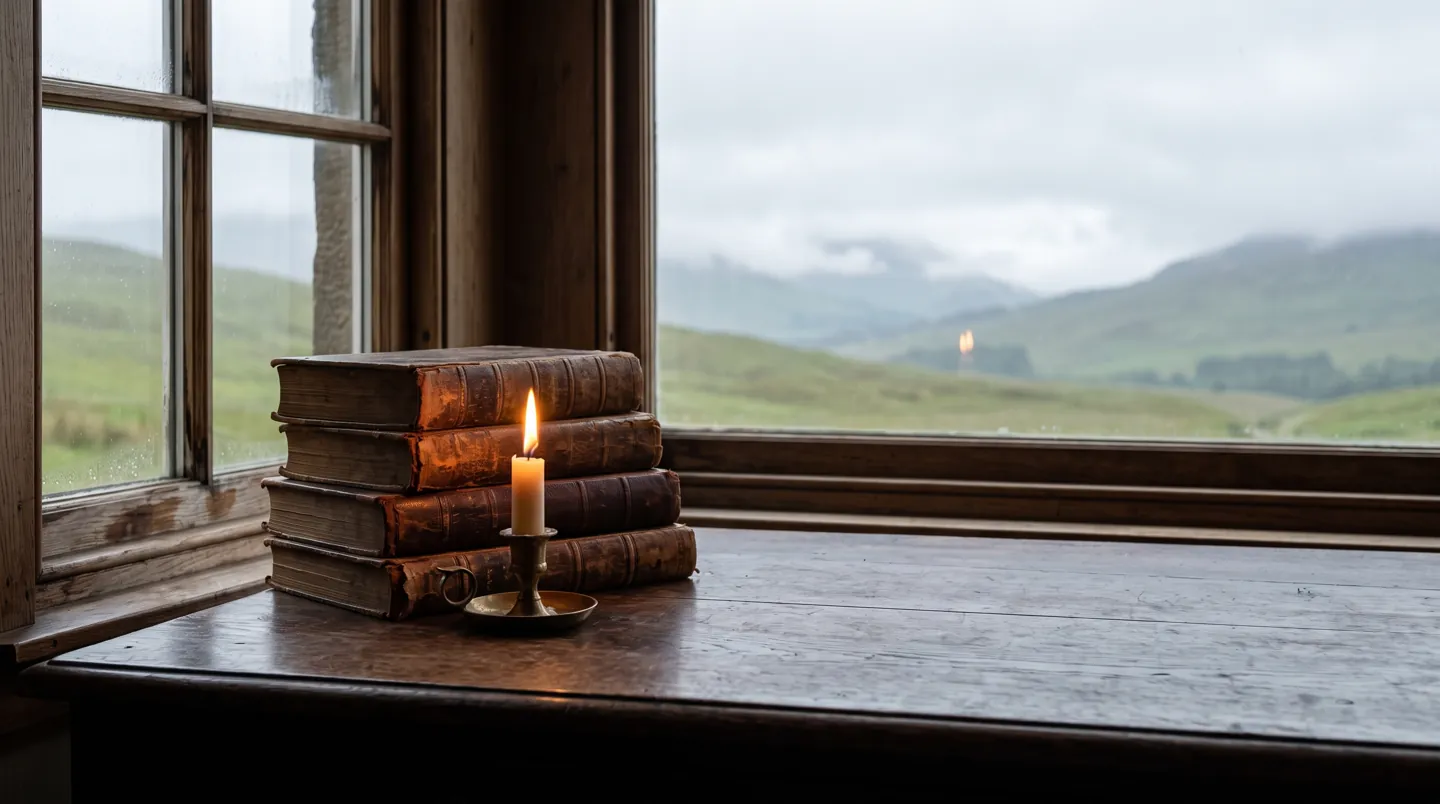
The word started in Scots as a twisted form of grammar, when learning and magic were easily confused. Walter Scott carried it into English verse, and it has been changing meaning ever since.
GRAMMARto glamour
Trace a wordKeep in mind
THE SHORT ANSWER
Three steps take grammar to glamour.
Each one is in the dictionaries.
THE ROOT
Grammar goes back to the Greek grammatikós, "knowing one's letters", from gramma, a letter. In the Middle Ages the Latin grammatica often meant scholarship in general.
Trace the familyTHE SPELL
In Scots, glamour meant magic or a spell, especially one affecting the sight. A 1721 glossary says those who deceive the sight "cast Glamour o'er the Eyes".
Read the old usesTHE SHINE
Today the dictionaries define glamour as the attractive, exciting quality that makes a person, job or place seem special, as in "the glamour of Hollywood".
Spell it rightONE ROOT, MANY WORDS
Pick a word from the grammar family. The bar shows how far its meaning has moved from the original idea of letters and learning.
Based on the Dictionaries of the Scots Language, the Oxford Advanced Learner's Dictionary and Dictionary.com.
TWO DATES WORTH KNOWING
One date from the oldest quotation,
one from the poem that spread the word.
1715
Earliest quotation in the Scots dictionary
The Scottish National Dictionary's quotations for glamour run from 1715 to 1917. Oxford dates the word to the early 18th century, originally Scots in the sense "enchantment, magic".
FIRST QUOTATION · SND
1805
The Lay of the Last Minstrel printed
Scott's poem was printed in Edinburgh on 12 January 1805. It includes the lines "It had much of glamour might, / Could make a ladye seem a knight."
WALTER SCOTT · ROYAL COLLECTION
The Scottish National Dictionary says glamour, "although now adopted by Eng., was orig. Sc. and popularised in liter. use by Scott".
FOUR SPELLING TIPS
The family is spelt a little unevenly. Here is what the Oxford and Cambridge learner's dictionaries list.
Step 1
The noun is glamour in British English. Oxford and Cambridge note that North American English also uses glamor.
Step 2
Oxford lists the adjective as glamorous, with no u, and the informal short form glam.
Step 3
Oxford lists glamorize, with glamorise also used in British English. It often means making something bad look attractive.
Step 4
If you get stuck, think of grammar: the r became an l, and the meaning wandered from books to spells.
THE OLD MEANING

Old Scots writing treats glamour as a spell that fools the eyes. Robert Burns, in 1789, put the two words side by side: "Ye gipsy-gang that deal in glamour, / And you, deep-read in hell's black grammar".
In 1830 Scott described it as a kind of witchcraft "well known in Scotland as the glamour, or deceptio visus". A writer in 1876 recorded a local belief that carrying a slip of rowan tree dispelled glamour. As a verb, to glamour someone meant to bewitch or dazzle them, or simply to deceive them.
Questions
Glamour is an alteration of the word grammar, first used in Scots. In the Middle Ages the Latin grammatica often meant learning in general, including the occult, so the Scots word came to mean magic or a spell, especially one affecting the sight. The Scottish National Dictionary's earliest quotation is from 1715, Walter Scott popularised the word in literature, and today it means the attractive, exciting quality that makes a person, job or place seem special.
Yes. The Scottish National Dictionary and the Oxford Advanced Learner's Dictionary both describe glamour as an alteration of the word grammar, first used in Scots.
Oxford explains that in the Middle Ages the Latin grammatica often meant scholarship or learning in general, including the occult practices people popularly linked with learning.
The Scottish National Dictionary says glamour was originally Scots and was popularised in literary use by Walter Scott. His 1805 poem The Lay of the Last Minstrel uses it for a magic power.
Spell it with the u: glamour. That is the British spelling, and Oxford's American English dictionary also gives glamour first, with glamor as an alternative spelling. The adjective drops the u: glamorous.
It meant putting a spell on someone's sight. The glossary to Ramsay's 1721 Poems says that when devils, wizards or jugglers deceive the sight, they are said to cast glamour over the eyes of the spectator.
Destination
Updated
ABOUT THIS NAME
doodleglamour.com is part of the DoodleSale portfolio. It isn't in an auction right now, but you can ask about leasing it.